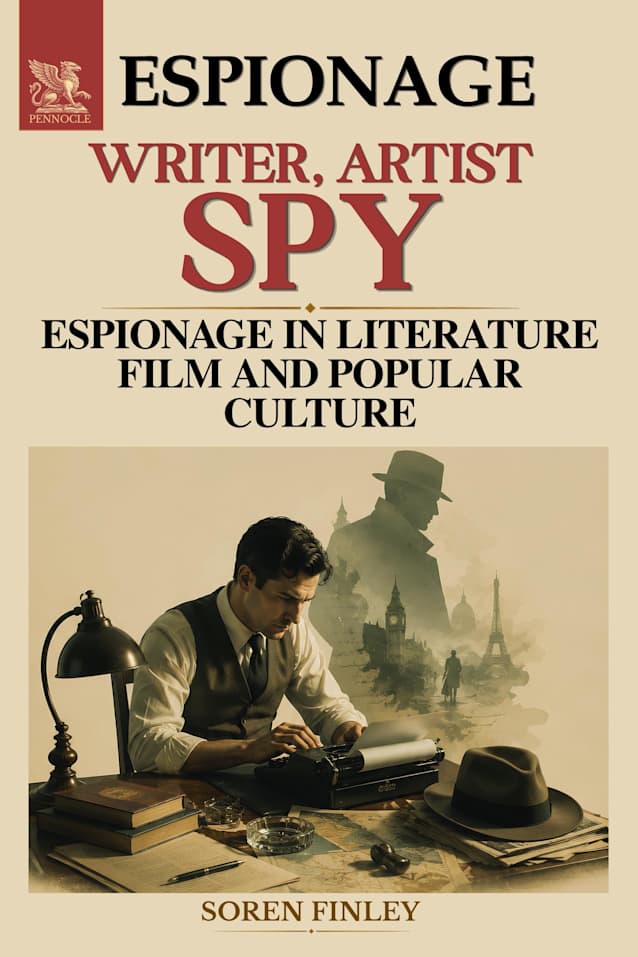
Writer, Artist, Spy: A Global History of Secret Agents and Espionage in Literature, Film, and Popular Culture
About
The spy and the storyteller have never been as separate as either side pretends.
For centuries, espionage and culture have been locked in a hidden feedback loop. Real spies became famous writers. Celebrated writers became real spies. Performers smuggled secrets past the enemy, intelligence agencies quietly bankrolled the art the public believed was free — and the fictional image of the spy went on to reshape how real agencies recruited, operated, and understood themselves.
Writer, Artist, Spy traces this entanglement across every inhabited continent and three thousand years, from ancient court poets to Bollywood, from the troubadours of medieval Europe to the CIA’s secret cultural empire.
Inside, you will discover:
- How Ian Fleming, Graham Greene, and John le Carré — three real intelligence officers — invented the competing myths of espionage that still shape how the world imagines the secret services.
- Why Josephine Baker smuggled intelligence in invisible ink on her sheet music, and how her fame made her untouchable.
- The children’s author who worked as a wartime seduction operative in Washington.
- The Japanese poet who may have been a shogunate spy, and the opera singer who maintained a false identity for twenty years.
- How the CIA secretly funded Abstract Expressionism, prestigious literary magazines, and the Nobel Prize campaign for Doctor Zhivago.
- Why Vladimir Putin credits spy fiction with inspiring him to join the KGB.
- The princesses of Mari who filed intelligence reports from enemy courts in 1800 BCE — predating Europe’s female spy networks by three millennia.
Ranging from Sun Tzu and Kautilya to Mata Hari, Marlene Dietrich, Roald Dahl, García Márquez, and the modern entertainment-intelligence complex, this is a global, evidence-based history that overturns the Western, Bond-shaped version of the secret world.